Which Tokaido Shinkansen Seat Should You Book With Kids? A Practical Guide
Where to sit, when to book, and how to actually see Mt. Fuji — from someone who’s ridden the Tokaido Shinkansen with a toddler in tow.
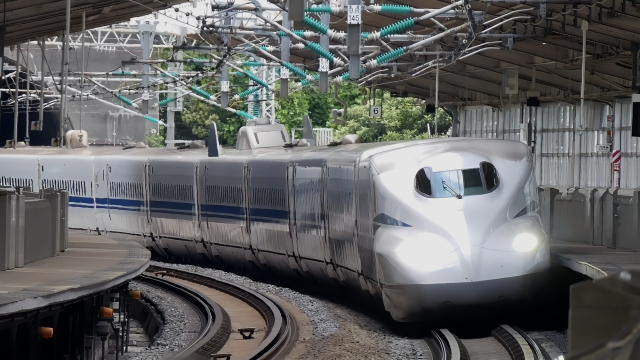
Traveling on the Shinkansen with young kids is generally pretty manageable — but a long train ride is still a long train ride when you have a toddler. The right seat can make a surprisingly big difference. Get it wrong and you’re stuck in the middle of a row with a squirming toddler and nowhere to go. Get it right and you’ve got a stretch-your-legs deck right outside your row and a shot at a Mt. Fuji view. Here’s what actually matters.
Book early — especially during holiday periods
Shinkansen reserved seats usually go on sale one month before your travel date. During Japan’s busiest travel periods — Golden Week, Obon, and New Year’s — popular trains and departure times can fill up fast.
Traveling with kids? If your dates are fixed, I’d book as soon as reservations open. That way, you’re much more likely to get seats together and a departure time that works for your family.
You don’t need to rush to book every Shinkansen trip, but during Japan’s big holiday periods, I wouldn’t leave it until the last minute.
During peak periods, the Nozomi has no unreserved seats at all
This one catches a lot of travelers off guard. During Golden Week, Obon, New Year’s, and a handful of specific three-day weekends each year, every seat on the Nozomi becomes reserved-only — there’s no unreserved car to fall back on. Traveling with kids and no reservation isn’t a realistic backup plan during these periods, so it’s worth booking ahead rather than counting on finding a seat once you’re there. The exact peak dates change slightly year to year, so it’s worth checking JR Central’s current schedule before you travel. (If you’re not traveling on the Nozomi, the Hikari and Kodama still run unreserved cars as usual — though those can get crowded too during the same periods.)
Best cars for kids aged 0–3: cars 11 and 12
If you’re traveling with a toddler or younger, cars 11 and 12 are the sweet spot. There’s a wide deck area between the two cars — you can let a restless toddler walk around there for a few minutes, which often works as a reset when they’re starting to get fussy mid-journey.
That same deck also has a multipurpose room (多目的室). Officially, it’s there for passengers with disabilities and they get priority use — but if it’s free, it’s sometimes possible to ask the train crew if you can use it for nursing or if your child suddenly isn’t feeling well. It’s never guaranteed, but it’s worth knowing it exists and asking politely if you need it.
Picking your actual seat
Two seats worth knowing about, for different reasons:
- The front-row seat of a car has a bit of extra legroom built in, since there’s no seat directly in front of you to recline back. If you’re traveling with a smaller, foldable stroller, this is often enough space to fold it up and keep it right in front of you.
- The last-row seat comes with an oversized luggage rack behind it (特大荷物スペース付き座席). This is where you can store large suitcases — and depending on the stroller type, sometimes even an unfolded stroller. Keep in mind these seats require reservation in advance; you can’t claim the space without booking it specifically.
Want to see Mt. Fuji? Book seat E
The Tokaido Shinkansen’s ordinary cars are arranged in rows of 5 seats — a group of 3 (A, B, C) and a group of 2 (D, E). Both A and E are window seats, but E is the one that faces Mt. Fuji. It doesn’t matter which car you’re in — any car, seat E, gives you a shot at the view.
A couple of practical notes: window seats are the first to get booked, so if a Fuji view matters to you, reserve early rather than leaving it to the last minute. And this works in both directions of travel — whether you’re heading from Tokyo toward Shin-Osaka or the other way — because the Shinkansen physically flips the seats to face the direction of travel at the terminus stations, rather than making you ride backwards. Seat E stays on the Fuji side either way.
The one thing no amount of planning can guarantee: the weather. Even with a perfect seat, Fuji only shows up on a clear day.
FAQ
Do I need to buy a reserved seat for my toddler?
If your child will occupy their own seat, yes — a reserved seat requires a fare and reservation, regardless of age. JR’s fare rules define a “child” (小児) as ages 6 up to under 12 — essentially, elementary school students — and a child in this bracket always needs their own paid, reserved seat. Younger kids (幼児, roughly age 1 to pre-elementary) work differently: if they ride the whole way on a parent’s lap without taking up a seat, no ticket is needed. But the moment they have their own seat — even as an infant — that seat needs to be paid for and reserved, same as anyone else’s.
Can I bring a stroller on board? Yes, but where you store it depends on the size.A compact, foldable stroller can usually be folded up and tucked in front of your seat or by your feet — just not in the aisle. (the front row gives you the most room for this). A larger, non-folding stroller is a better fit for the oversized-luggage seat at the back of the car — but you’ll need to reserve that seat specifically.
What if the reserved seats I want are already full? Try a different train time or day — availability varies a lot even within the same travel date. And remember: during peak periods, the Nozomi runs reserved-seat-only, so if you can’t get a Nozomi reservation, the Hikari or Kodama (which keep unreserved cars even during peak season) are worth checking as a backup, even though they take a bit longer.