SCMAGLEV and Railway Park (Nagoya) with Kids: A Local Mom’s Guide
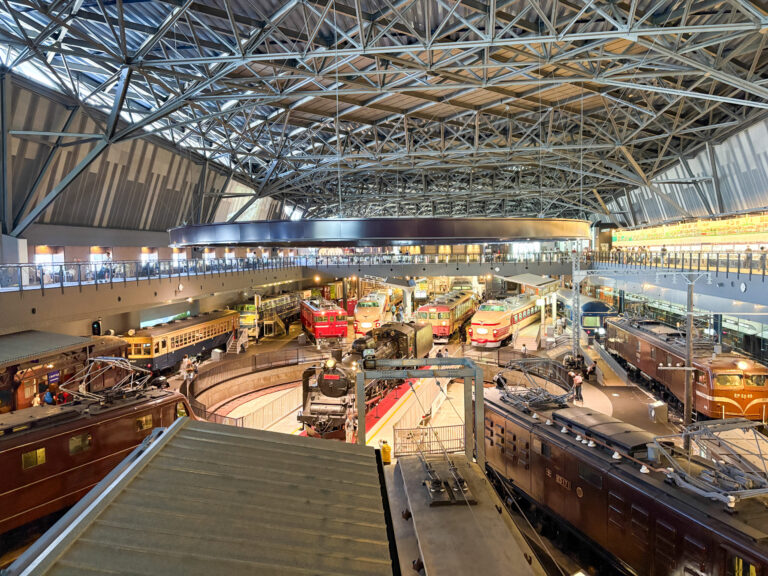
If your kid is even a little bit into trains, this place is a big deal. Officially it’s the SCMAGLEV and Railway Park, but most people around here just call it リニア・鉄道館 (Linear Tetsudokan). It’s Nagoya’s train museum, and it’s built around actual, full-size rolling stock you can walk up to, walk into, and in some cases climb through — not glass cases with “do not touch” signs.
We went over the New Year’s holidays, and honestly went in expecting it to be crowded given the timing — it wasn’t too bad. If your kids want to try the simulators on a weekend, though, I’d get there early; more on that below.
My son (toddler) still can’t quite tell a maglev train from a regular Shinkansen, but that didn’t stop him from running the length of every car shouting “big shinkansen!” My daughter (preschool age) was the one who actually got something out of the exhibits — more on what stuck with each of them below.
Quick Info
| Would I recommend it? | Yes, especially for train-loving kids |
| Best for | ✔ Train-obsessed kids of any age · ✔ Families based in or visiting Nagoya |
| Not ideal for | ✘ Families hoping to eat a proper meal on-site (no restaurant — more below) |
| Best age | Toddler and up; preschool age and older will get more out of the exhibits |
| Crowd level | Manageable even over New Year’s, but simulators can have a line on weekends |
| Stroller-friendly? | Yes — the building is fully accessible, with elevators throughout |
| English support | Free audio guide available in English (and several other languages) |
| Parking | No on-site parking lot — nearby paid lots are your best bet if you’re driving |
| Time needed | Half day to full day, depending on how train-obsessed your kids are |
| Admission | Adults ¥1,200 / school-age kids ¥500 / kids age 3+ ¥200 (younger, free) |
Why We Loved It
You can actually get inside the trains
This is what sets this place apart from a typical museum. There are 39 rolling stock displays in total — maglev trains and conventional Shinkansen alike — and a lot of them, you can walk right into. One of the retired Shinkansen models on display is a genuine two-story car with what used to be a dining car, which isn’t something you’d ever get to experience on a regular ride these days.
There’s also a retired Doctor Yellow car on permanent display (it was retired from active service in 2025). Doctor Yellow is the inspection train that Shinkansen fans practically consider a celebrity sighting if they spot it running — getting to walk through car 7 and actually touch things you’d never get near on the real, working train is a pretty special experience, even for adults.
The maglev exhibits break the science down for kids
The SC Maglev Exhibition Hall breaks down how maglev trains actually work, with displays on the magnet system that felt more like a small science museum than a train museum. It’s not exactly toddler-level material, but my kids stayed interested anyway. There’s also a mini theater designed to give you a sense of what a maglev car interior might feel like, where you can experience a simulated ride using video. My daughter walked out of there saying she couldn’t wait to ride a real maglev train someday.
As someone local to the area, this is an easy repeat visit
Living in the area, this isn’t a once-and-done destination for us. Between the size of the collection and the simulators (which are one-time-only per visit, so you don’t always get through the one you want), it’s the kind of place where a second or third visit still turns up something new. If you’re only visiting Nagoya for a short trip, one visit is still absolutely worth it — just don’t expect to see everything in one go.
What My Kids Loved Most
Our toddler
- Running from one end of each train car to the other, over and over
- Didn’t fully grasp the maglev-vs-Shinkansen distinction, but loved every car regardless
- Was too young for the simulators this time around, so we skipped them
Our preschooler
- Surprised to learn old Shinkansen cars used to be two stories with a dining car (“It used to be two floors!”)
- Loved the mini theater maglev ride simulation
- Left wanting to ride a real maglev train
Things to Know Before You Go
There’s no restaurant inside This one’s worth planning around. The museum itself doesn’t have a restaurant, but there’s a shop that sells eki-ben (train station bento boxes) — including train-shaped lunch boxes that are popular enough to sell out. If you want one, head to the shop right after you enter; we split up as soon as we got in specifically to grab them before they ran out. You can also reserve a bento up to 3 days ahead through their (Japanese-only) online shop.
Simulators are first-come, first-served — no reservations The Shinkansen driving simulator (¥500, 15 minutes) and the conventional train driving simulator (¥100, 10 minutes) are both sold on-site on the day, and they can run out. If your kids have their hearts set on trying one, especially on a weekend, get there early and head straight to buy tickets.
No on-site parking If you’re driving, you’ll need to use one of the paid lots nearby — there isn’t a lot attached to the museum itself.
Closed on Tuesdays With one exception: if a national holiday falls on a Tuesday, the museum stays open that day and closes the following day instead. Also closed December 28th through January 1st.
Food
No restaurant on-site, but you have options. Bringing your own food is completely fine — there are tables in front of the Delica Station, seating on the 2nd floor center deck (with a view of the rolling stock), and you can even eat in the seats of the N700 series car on outdoor display. Buying an eki-ben from the shop is the other easy option, just don’t wait too long if you want one of the popular train-shaped lunch boxes. There aren’t really any restaurants within easy walking distance, so plan to either bring food or buy it inside.

Getting There
By train (recommended): The museum is about a 2-minute walk from Kinjofuto Station on the Aonami Line. From Nagoya Station, it’s roughly 24 minutes on the Aonami Line. If you’re coming from Chubu Centrair International Airport, take the Meitetsu Line to Nagoya Station, then transfer to the Aonami Line.
By car: There’s no parking lot at the museum itself, so you’ll need to use one of the neighboring paid lots.
Tips from a Local Mom
- Head straight for the eki-ben shop after entering if you want a train-shaped lunch box — they sell out
- Get there early on weekends if your kids want to try a simulator
- Bring your own food as a backup — there’s plenty of seating for it, including inside a real train car outdoors
- Use the free English audio guide if you want more context on the exhibits than the signage alone gives you
- The stroller-friendly, elevator-equipped layout makes this an easy one even with a napping baby in tow
- If you’re visiting in summer, look out for their Night Zoo–style evening events (seasonal, usually during summer break)
- Budget more time than you think — between the rolling stock, the simulators, and the maglev hall, it adds up fast
FAQ
Is the SCMAGLEV and Railway Park good for toddlers? Yes — the sheer scale of the trains is exciting even for kids too young to understand what a maglev train is. Just know the simulators have a minimum age/height in practice, since operating them requires some coordination, so younger toddlers may sit that part out.
How much does it cost? Adult admission is ¥1,200, school-age children are ¥500, and younger children (age 3 and up) are ¥200. Kids under 3 get in free.
Is there parking on-site? No — there’s no parking lot at the museum itself, so drivers need to use one of the nearby paid lots.
Can you eat inside the museum? There’s no restaurant, but outside food is allowed, and there’s an eki-ben shop on-site with popular train-shaped lunch boxes (which can sell out, so buy early if you want one).
Is there English support? Yes — a free audio guide is available in English, along with Chinese, Korean, French, German, Spanish, and Portuguese, accessible via your smartphone over the museum’s free Wi-Fi.