Edo-Tokyo Museum with Kids: A Local Mom’s Guide (Reopened!)
Visited June 2026 | Kids: a toddler and a school-age child
I’ll be honest with you: I nearly left our toddler at home for this one. The Edo-Tokyo Museum sounds like exactly the kind of place that needs a certain level of patience to appreciate — and toddlers are famously short on patience.
But we went, all four of us, and it was worth it. Not because our youngest suddenly developed a passion for Edo period history — he absolutely did not — but because the museum turned out to have more for young kids than I expected, and for the adults? It was genuinely one of the best museum experiences I’ve had in Tokyo.
One important note: the museum has just reopened after a four-year renovation (March 2026), so if you visited before the closure, it’s worth going back — the renovations are significant.
Quick Info
| Would I recommend it? | Yes — especially for adults and older kids; younger ones will enjoy it too with adjusted expectations |
| Best for | ✔ History lovers · ✔ Older kids · ✔ Adults |
| Best age for kids | Kindergarten age and up for some engagement; upper elementary and above to fully appreciate it |
| Admission | Adults ¥800 · High school students ¥300 · Junior high school and younger: Free · Check official site for special exhibition fees |
| Opening hours | 9:30–17:30 (check official site — hours may vary) |
| Crowd level | Busy — especially the ticket queue. Buy online in advance |
| Stroller-friendly? | Yes — fully accessible |
| English support | Yes — exhibits have English signage; audio guides available in 13 languages |
| Time needed | Half day minimum for adults; 2–3 hours with young kids |
| Our kids | A toddler and an older child |
Why We Loved the Edo-Tokyo Museum
1. The scale and detail of the exhibits is genuinely impressive
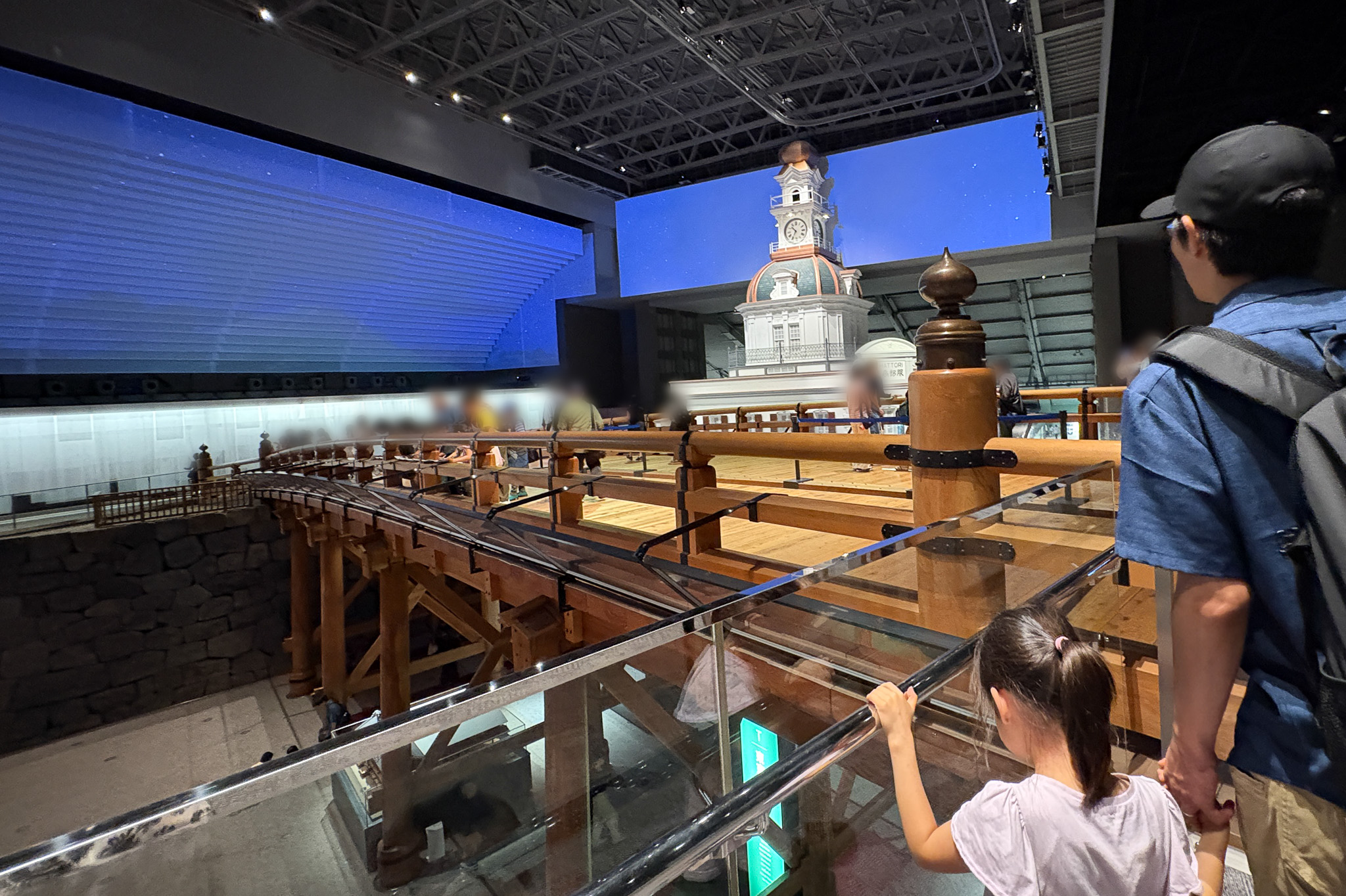
This museum covers 400 years of Tokyo’s history — from the Edo period all the way through to the Showa era — and it does it with full-scale reconstructions, enormous dioramas, and actual artifacts. The half-scale replica of Nihonbashi Bridge is a centrepiece that stops you in your tracks. Stalls from old Edo markets, street food vendors, sushi and tempura shops from a different era — it’s history you can actually picture yourself walking through.
As someone who’s been to a lot of museums in Tokyo, this one stands out for how immersive it feels. I honestly could have spent the whole day there without kids, just taking it all in.
2. More hands-on than you’d expect
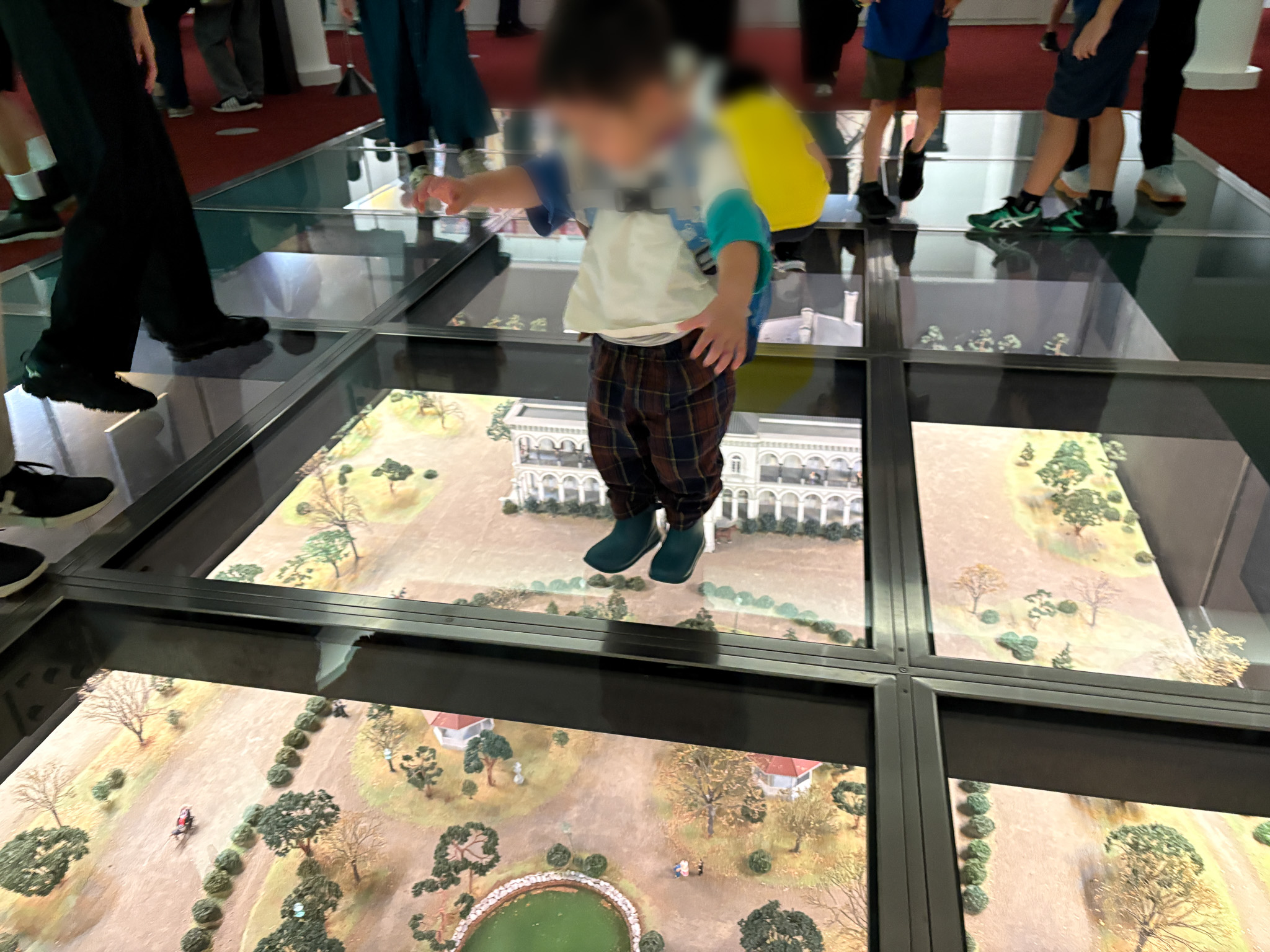
For a museum of this calibre, there are a surprising number of interactive elements. You can try lifting a replica of a real fireman’s matoi (the heavy ceremonial standard carried by Edo-era firefighters) — which turns out to weigh considerably more than it looks. Vintage bicycles as photo spots, interactive displays, large-scale models you can look into — it kept even our younger one curious, even if the historical context was completely lost on her.
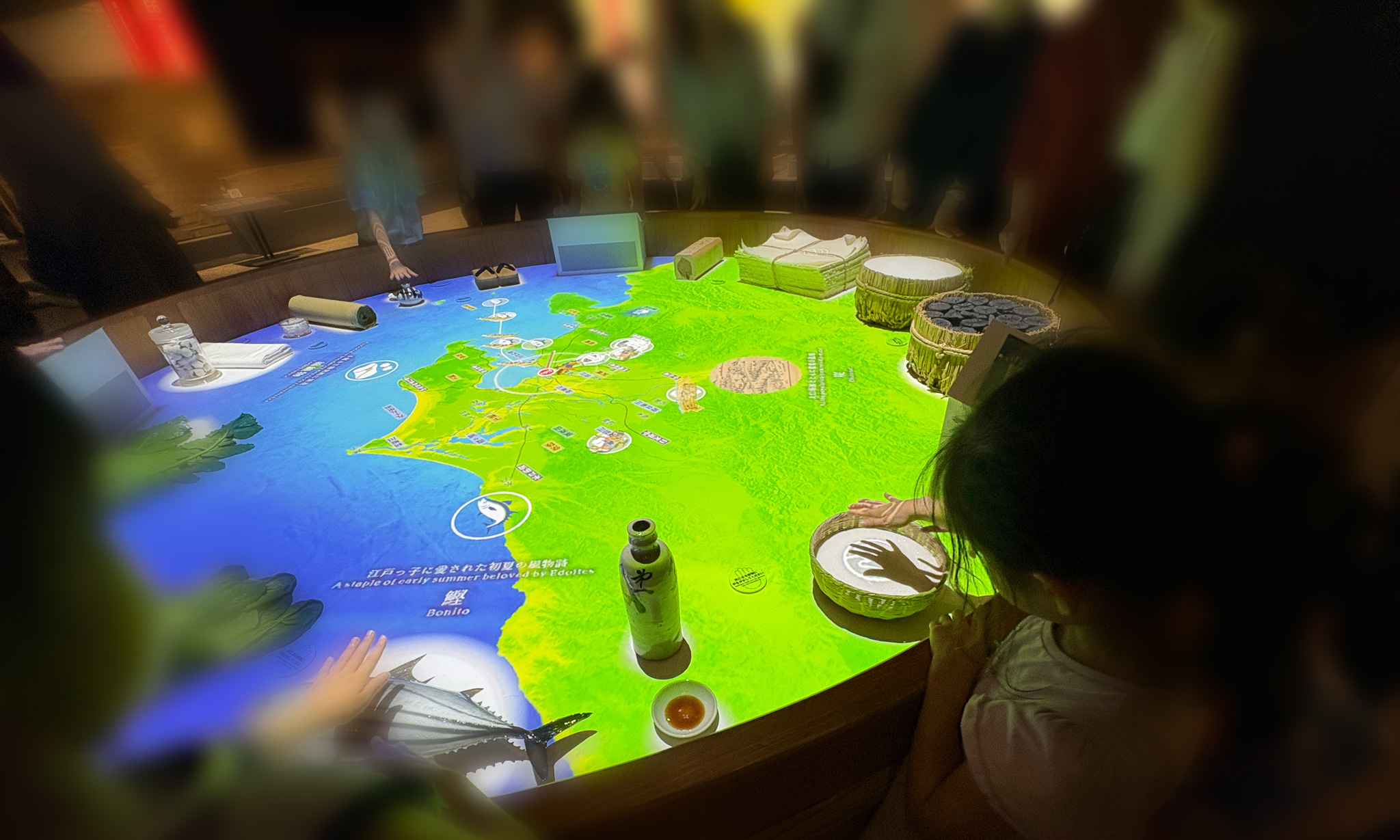
3. Fully accessible and stroller-friendly
We spotted several families with strollers during our visit, and the museum is genuinely well set up for them. Wide corridors, lifts between floors, and plenty of space to manoeuvre. For a museum this large, that matters.
What My Kids Loved Most
Our toddler
- The sheer scale of the exhibits — big things, unusual things, things to point at
- A vintage bicycle photo spot (“I wanna ride it!”)
- The interactive displays — didn’t know what they were for, but loved pressing things
Our older child
- The Edo-era food stall models — street vendors selling tempura and sushi, which prompted the observation that “sushi used to be much bigger”
- Tools and objects from daily life in Edo — genuinely more interested than I expected
- Anything hands-on, especially the matoi
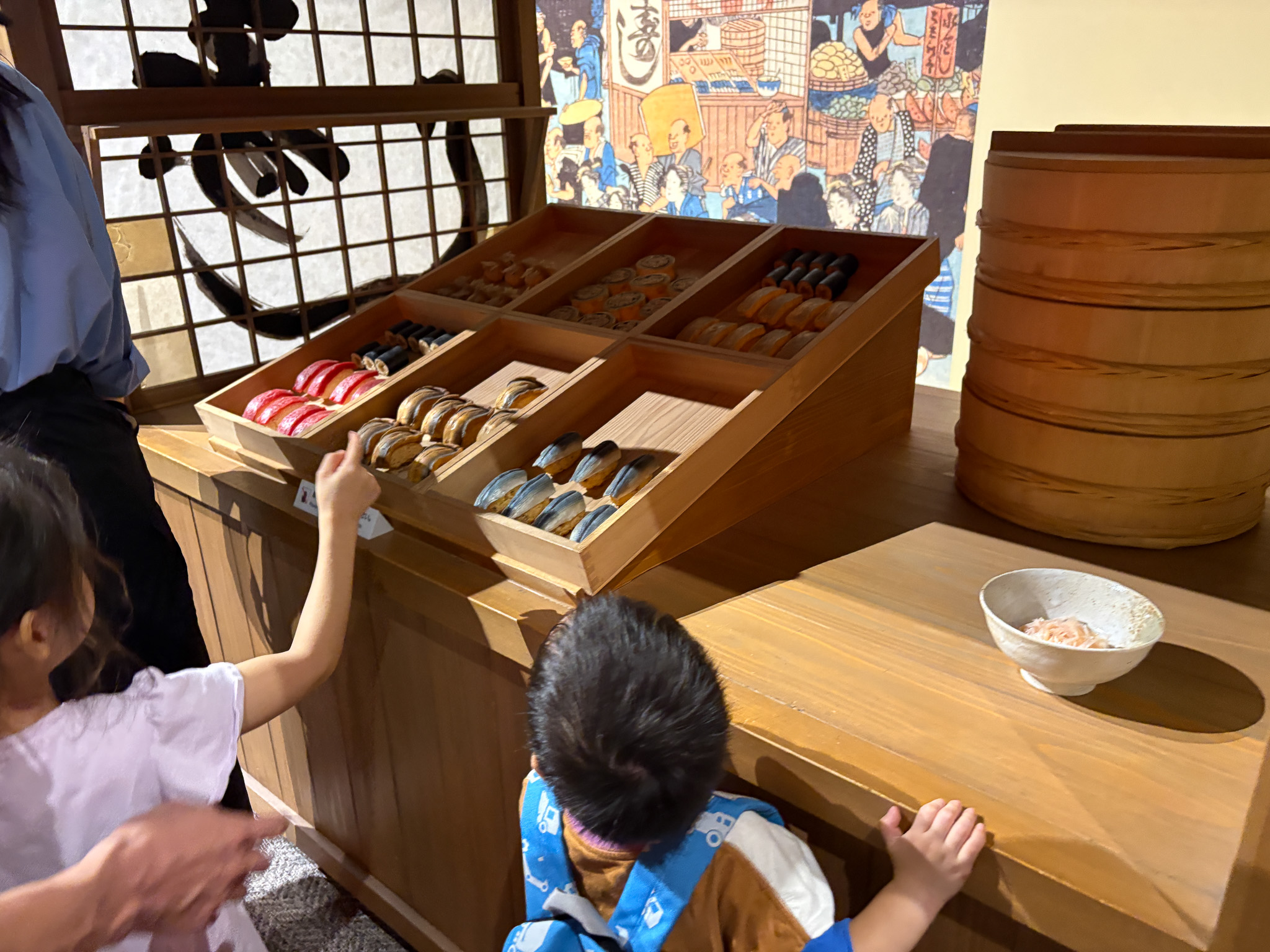
(Honest note: our toddler was clearly a few years too young to get much from the content — but the museum’s atmosphere and sheer visual richness kept things moving. I’d say kindergarten age is around when kids start to engage with the material, and upper elementary is when they’ll really get something out of it.)
Things to Know Before You Go
Buy tickets online — the queue is long
This was our biggest lesson of the day. The ticket queue at the entrance was very long when we visited. Buying online in advance is strongly recommended, especially on weekends.
Budget more time than you think
For adults, this museum could easily take half a day or more. The permanent exhibition alone covers centuries of history, and with a special exhibition on top, you could spend an entire day. With young kids, you’ll naturally move faster — but don’t underestimate how much is here.
Junior high school and younger get in free
This is worth knowing before you go. Admission is free for preschoolers, elementary school students, and junior high school students. For families, this makes the museum excellent value.
Family Day discount
On the third Saturday of every month and the following Sunday (Family Day), up to two guardians accompanying children under 18 residing in Tokyo can enjoy half-price admission to the permanent exhibition.
Food
This is where we had our one failure of the day, and I’m sharing it so you don’t repeat it.
The area around Ryogoku Station has plenty of restaurants — chains and independents alike, including chanko nabe (the hearty sumo wrestler’s hot pot this neighbourhood is famous for). We assumed we’d have no trouble finding somewhere for lunch on a weekend.
We were wrong. There happened to be an event nearby, and everywhere was packed. We ended up at McDonald’s — takeaway, eaten standing up, because there weren’t even seats available. Not quite the chanko nabe experience I had in mind 😅
My advice: If you want to try chanko nabe in Ryogoku (and you should — it’s worth it), make a reservation in advance. Don’t leave it to chance on a weekend.
The museum itself has a restaurant and café on the 7F.
→ Museum Shop/Restaurant & Cafe info
English Support
The permanent exhibition galleries offer audio guides in 13 languages, including English. Exhibit labels and signage also include English throughout the museum. International visitors are well catered for.
Getting There
By train:
- 3-minute walk from the West Exit of Ryogoku Station (JR Sobu Line)
- 1-minute walk from A3 or A4 Exit of Ryogoku Station (Toei Oedo Line)
Tips from a Local Mom
- Buy tickets online in advance — the on-site queue was genuinely long when we visited
- Junior high school and younger get in free — great value for families
- Check Family Day — half-price for up to two adults on the third Saturday and Sunday of each month
- Reserve lunch in advance if you want chanko nabe in Ryogoku — don’t assume you’ll find somewhere on a weekend
- Adjust expectations for toddlers — there’s enough to hold their attention, but the real depth is for older kids and adults
- Budget at least half a day — there’s more here than you can cover in a quick visit
- Audio guides are available in English — worth picking up if you want more context
FAQ
Is the Edo-Tokyo Museum good for young kids? It depends on age. Our toddler was too young to follow the content but stayed curious thanks to the scale and interactive elements. Kindergarten age and up will start to engage more meaningfully. Upper elementary is probably the sweet spot for really getting something out of it.
Is admission free for children? Yes — admission is free for preschoolers, elementary school students, and junior high school students. Adults pay ¥800 for the permanent exhibition.
Is the museum stroller-friendly? Yes — fully accessible, with lifts and wide corridors throughout.
Is there English support? Yes — audio guides are available in 13 languages including English, and exhibits have English signage throughout.
Has the museum recently reopened? Yes — the Edo-Tokyo Museum reopened on March 31, 2026 after approximately four years of renovation. The renovation included upgrades to the building, permanent exhibition environment, and visitor services.